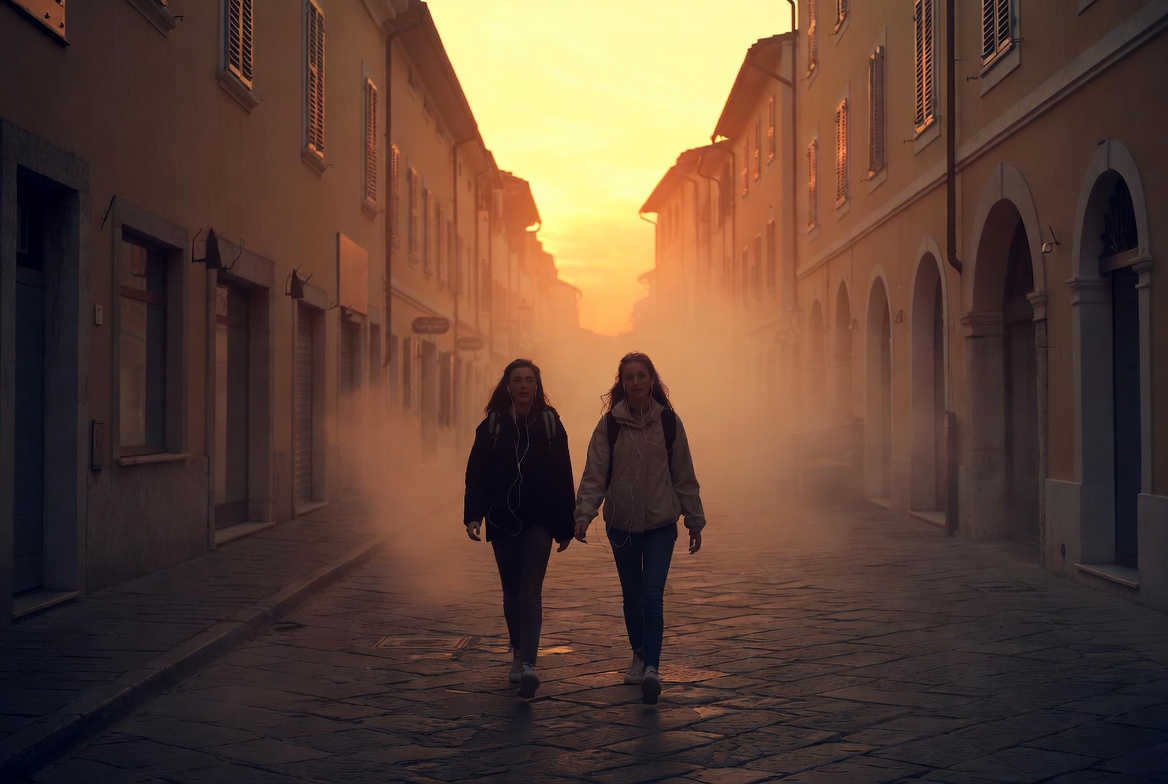
In 1990, my wife and I went to Florence armed with a paperback called Florence Walks, and for the better part of a week I turned into the world's least qualified audiobook narrator. The book was terrific: history, art, architecture, and the gossip of a place, without ever feeling like homework. The trouble was the delivery mechanism, which was me. Somewhere around the Ponte Vecchio I was walking slightly backward, squinting at small print, reading aloud to my wife while trying not to step in front of a Vespa. It worked, more or less. But I remember thinking there has to be a better way to do this.
I've taken more walking tours than I can count, and I'll keep taking them. A good guide is one of travel's genuine pleasures. You just don't find out whether you've got a good one or a dud until you're already committed, the way you're committed to a haircut the moment the first cut goes in. But I never forgot about that book. I once tried to recreate the magic of the book by adapting museum-style audio devices for whole cities. The idea was sound. The logistics were a nightmare. It would not work as a business.
What I wanted was a guide that knew as much as that Florence paperback, talked like a good human guide, and answered when you asked it something. That's Explorio. It took the better part of thirty years for the technology to catch up. I no longer have to read aloud while dodging Vespas, which my wife, for one, considers real progress.
If you've ever stood in front of something beautiful with more questions than answers and no one around to ask, that's exactly who we built this for.